ARC Spec Explained: The RFID Certification Behind Retail Mandates
Your RFID tags are installed. The readers are ready. Then the read rates come back at 78%.
Suddenly you’re facing chargebacks, compliance penalties, and frustrated retail partners. The culprit? Tags that weren’t certified for your specific application.
That’s where ARC Spec comes in.

ARC Spec in 30 Seconds
ARC stands for Auburn University RFID Lab Approval and Certification. It’s the industry standard for verifying that RFID inlays will actually perform as expected in real-world conditions.
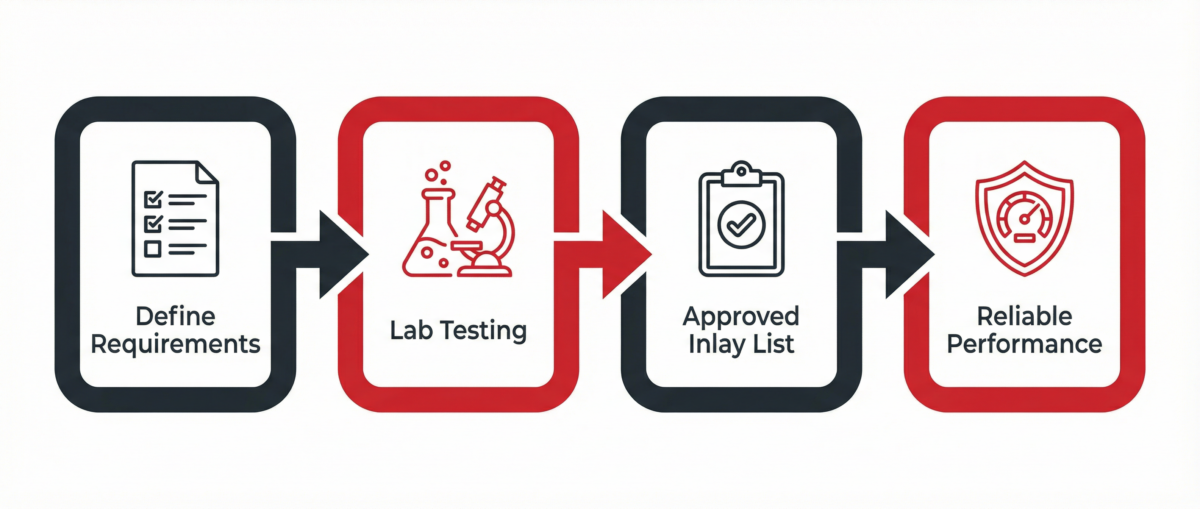
Here’s how the program works:
- End users define requirements (use case, environment, read range)
- Auburn’s RFID Lab tests inlays against those requirements
- Certified inlays get approved for specific “Specs”
- Brands and businesses deliver tags that meet documented performance standards
Each Spec letter (R, H, S, Y2, etc.) corresponds to specific product categories and performance requirements. There are currently 20+ published ARC Specs.
Common ARC Specs at a Glance
Different products require different tag performance. Here are some of the most common ARC Specs and what they cover:
| Spec | Segment | Applications |
| C2 | Retail | Non-Apparel |
| F | Retail, FCC | Apparel, Home |
| H | Retail | High Density Apparel |
| L | Retail | Intimates Apparel |
| O | Retail | Sporting Goods, Crafts, Stationary |
| P | Automotive | Batteries |
| Q | Retail | Accessories |
| R | Retail, FCC | Apparel & Footwear |
| S | Healthcare | Pharmaceutical |
| T | Automotive | Tire |
| U | Baggage | Aviation |
| W5 | Retail | Sunglasses, Accessories |
| W6 | Retail | Jewelry |
| Y2 | Retail | Electronics, Toys |
| Z | Retail | Quick Service Retail, Food |
Source: Auburn University RFID Lab ARC Program. This is a simplified overview of common Specs. For complete, current specifications, visit Auburn’s ARC Documents page. Always confirm the Spec required for your specific application.
Why ARC Certification Matters
For brands meeting RFID mandates: Major retailers like Walmart, Target, and Nordstrom require ARC-certified inlays. Non-compliance means chargebacks and strained partnerships.
For operations teams: ARC certification means tags that actually perform. A tag certified for apparel won’t necessarily work on cosmetics packaging. The right Spec matches your specific application.
For procurement managers: Specifying ARC-certified inlays protects your investment. You get documented performance assurance rather than hoping tags work at scale.
ARC Beyond Retail Mandates
While retail mandates drive much of the current adoption, ARC certification applies anywhere RFID reliability matters:
- Logistics & Warehousing: Automated receiving, real-time inventory, returnable container tracking
- Manufacturing: Work-in-progress tracking, component authentication, assembly automation
- Healthcare: Medication tracking, device management, patient safety applications
Ensuring ARC Compliance
- Know your application. What are you tagging? What conditions will tags face? What read performance do you need?
- Verify certification. Confirm your supplier’s recommended inlays appear on Auburn’s approved list for the Spec required for your products.
- Partner with experts. Experienced RFID label converters can match your requirements to the right certified inlays and ensure your complete label construction performs as expected.
Get ARC-Certified RFID Labels
ID Images delivers ARC-certified RFID labels with in-line encoding and verification across our North American facilities. Whether you’re meeting a retail mandate or implementing warehouse automation, our team can help you navigate ARC Spec requirements and select the right certified inlays for your application.
Related Reading: