Where RFID Makes the Biggest Impact in Your Supply Chain
 Supply chains are under more pressure than ever.
More SKUs, tighter timelines, and increasing operational complexity are pushing traditional tracking methods to their limits.
Manual scanning and disconnected systems often create gaps in visibility, leading to delays, inaccuracies, and added labor.
RFID is helping close those gaps.
By enabling real-time visibility from production through delivery, RFID allows operations to move faster, improve accuracy, and maintain control across the entire supply chain.
Production: Improving Visibility on the Floor
On the production floor, visibility is critical to keeping operations moving.
RFID allows teams to track raw materials, work-in-progress, and finished goods in real time. Instead of relying on manual updates or delayed data, teams gain immediate insight into where products are and how they’re moving through production.
This reduces the risk of misplaced materials, minimizes delays, and helps maintain a more consistent workflow.
Inventory & Warehousing: Driving Accuracy at Scale
As inventory volumes increase, maintaining accuracy becomes more challenging.
RFID reduces the need for manual scanning by automatically capturing data as items move throughout the facility. This allows for more accurate inventory counts, faster cycle checks, and better visibility across high-SKU environments.
The result is improved efficiency, reduced labor demands, and greater confidence in inventory data.
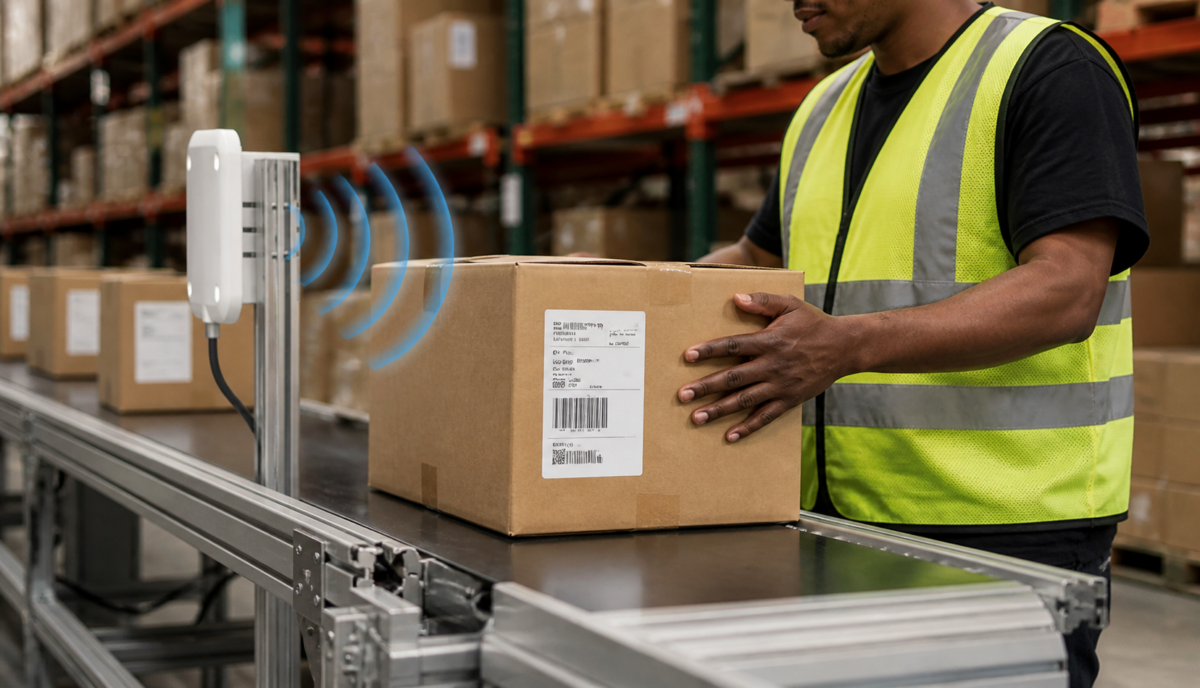
Logistics & Distribution: Increasing Speed and Reliability
In distribution, speed and accuracy must work together.
RFID helps streamline receiving, picking, and shipping processes by providing real-time tracking as products move through key checkpoints. This reduces bottlenecks, improves shipment accuracy, and enhances traceability from the warehouse to final delivery.
Operations can move faster, without sacrificing control.
Connecting the Supply Chain with Real-Time Data
The value of RFID extends beyond individual processes.
By connecting data across production, warehousing, and logistics, RFID creates a more complete view of the supply chain. This visibility supports better decision-making, improves forecasting, and helps identify inefficiencies before they impact operations.
Why It Matters
As supply chains continue to evolve, the need for real-time visibility and operational efficiency will only increase.
RFID is no longer just an emerging technology, it’s becoming a critical tool for organizations looking to scale, reduce errors, and improve performance across their operations.
At ID Images, we work with companies to implement RFID solutions designed to perform across the full supply chain—from production environments to distribution and delivery.