Episode 1 – Ask the Technical Expert: Why Do Labels Fall Off Even When You’re Using a Permanent Adhesive?
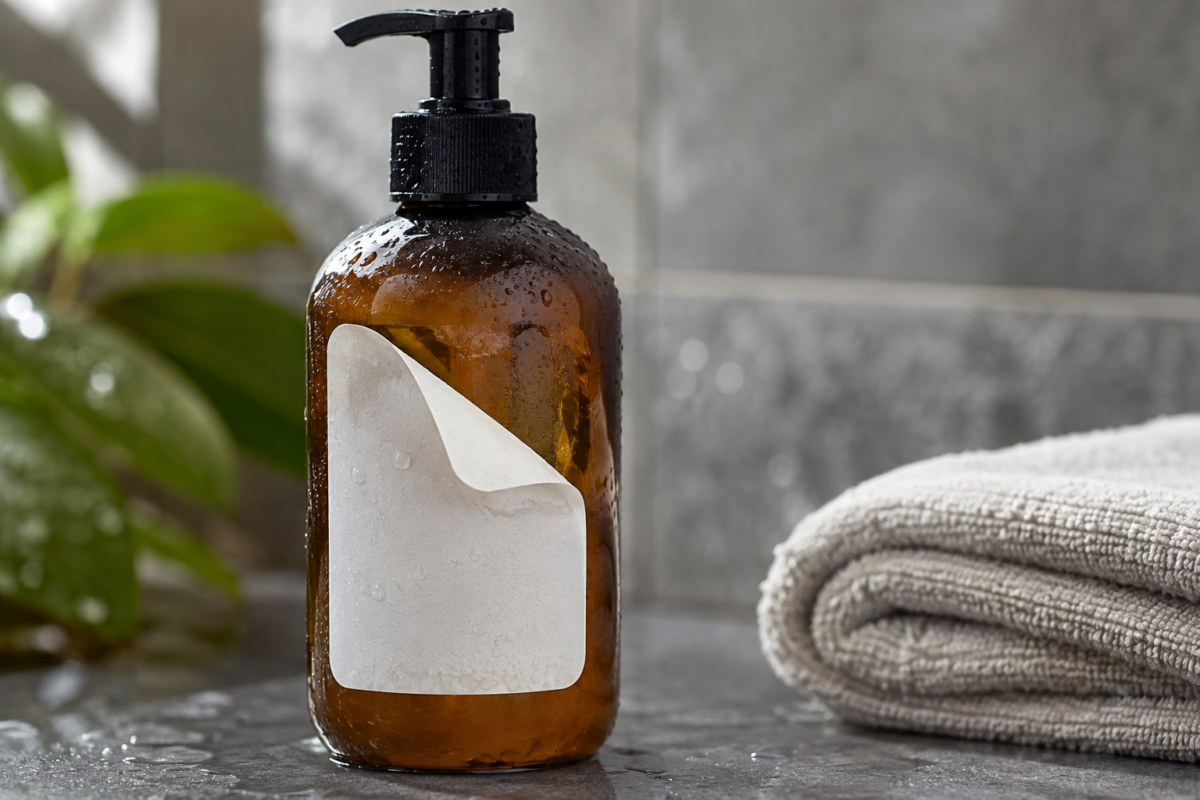 You specified a permanent adhesive.
The label looked right when it was applied.
And now it’s lifting, peeling or falling off.
The natural conclusion is that you need a stronger adhesive.
Not necessarily.
One of the most common misconceptions I encounter is that a “permanent adhesive” should stick to virtually any surface under virtually any condition.
It doesn’t work that way.
The adhesive is only one part of a much larger system. The surface, temperature, cleanliness, pressure during application and what happens to the product afterward can all determine whether that adhesive gets the opportunity to perform as intended.
Understanding that can save you from repeatedly changing label materials without ever solving the real problem.
Permanent Doesn’t Mean Universal
When we describe an adhesive as permanent, we’re describing the type of bond it is designed to create.
We’re not saying that it will automatically form that bond on every substrate and under every application condition.
Think about the difference between applying the same label to clean glass, corrugated cardboard, a textured plastic tote and a container with condensation on it.
It’s the same adhesive.
But those are four very different applications.
That’s why one of my first questions when troubleshooting an adhesion problem isn’t, “Which adhesive are you using?”
It’s:
“What exactly are you sticking it to, and what’s happening when the label is applied?”
-
Start With the Surface
Different materials have different surface characteristics, and some are much more difficult for pressure-sensitive adhesives to bond to than others.
Certain plastics, textured materials, recycled surfaces and other low-surface-energy substrates can be particularly challenging.
Even surfaces that look identical can behave differently.
A change in a plastic formulation, coating or manufacturing process can affect adhesion without anyone realizing the surface itself has changed.
That’s why material selection should start with the actual substrate, not simply the description “plastic container” or “cardboard box.”
Whenever possible, we want to test against the real surface the customer is using.
-
Look for What You Can’t See
Another common source of problems is contamination.
Dust, oil, moisture, mold-release agents, cleaners and other residues can create a barrier between the adhesive and the surface.
Condensation is a particularly good example.
If you’re applying a label to a cold beverage, refrigerated food container or another product moving between temperature environments, there may be a thin layer of moisture between the label and the container.
You may barely be able to see it.
The adhesive certainly knows it’s there.
-
Temperature at Application Matters
This is one of the biggest areas of misunderstanding I encounter.
A label may be capable of surviving very cold temperatures after it has been properly applied, while still requiring a warmer temperature when it initially goes onto the product.
Those are two different specifications: application temperature and service temperature.
We’ll explore that distinction in the next Ask the Technical Expert article, but the important point is this:
Where a label will eventually live isn’t necessarily the same environment in which it should be applied.
-
Pressure Really Does Matter
There’s a reason they’re called pressure-sensitive adhesives.
The adhesive needs sufficient contact with the surface to develop a bond. If an application process doesn’t provide adequate or consistent pressure, you may not get the contact you’re expecting.
This becomes especially important with rough, textured or curved surfaces.
A label can appear to be attached while portions of the adhesive aren’t making effective contact with the substrate.
-
Give the Adhesive Time to Work
Adhesion doesn’t necessarily reach its ultimate strength the instant the label touches the surface.
Pressure-sensitive adhesives can build bond strength over time. Avery Dennison, for example, notes that PSAs require dwell time to reach optimum strength, and application conditions can affect that process.
That can create problems on fast production lines.
If a newly labeled product is immediately exposed to refrigeration, moisture, movement or another stress before the adhesive has developed sufficient bond strength, the label can fail even though the material itself may have been appropriate.
Before You Change the Adhesive, Ask These Questions
If you’re experiencing adhesion problems, here are some of the questions I recommend asking:
- What is the exact surface material?
- Has the container or substrate changed recently?
- Is the surface clean and dry during application?
- What is the surface temperature when the label is applied?
- What temperature does the product encounter afterward?
- Is the surface flat, curved, rough or textured?
- How much application pressure is being used?
- How quickly after application is the product moved, refrigerated, frozen or exposed to moisture?
- Has anything else changed in the production process?
Those questions often tell us much more than simply knowing the adhesive number.
The Bigger Lesson
When a label isn’t sticking, don’t immediately assume you have a label problem.
You have an application to understand.
Sometimes the answer will be a different adhesive. Sometimes it will be a different facestock or construction.
But other times, the right solution may involve changing the application conditions, allowing additional dwell time, cleaning the surface or correcting another part of the process.
That’s why technical troubleshooting should begin with the complete application.
At ID Images, my role is to work with our customers and teams to investigate those variables, whether that means evaluating samples, conducting testing or traveling to a customer’s facility to see the application firsthand.
Because the goal isn’t to sell you a stronger label.
It’s to help you build a labeling solution that works.
Quick Answer: Why Does a Permanent Label Fall Off?
A permanent label can fail because of the substrate, low surface energy, contamination, moisture, application temperature, inadequate pressure, insufficient dwell time or other environmental conditions. Changing to a stronger adhesive without identifying the root cause may not solve the problem.
Have a difficult label application? Talk to your ID Images representative about bringing our technical team into the conversation.
By John Signet, Technical Solutions Manager, ID Images and Chair, TLMI Technical Committee